
Cultivating human resources active in the environmental field.
In partnership with universities and other institutions, we conduct joint research on satoyama and implement training programs to cultivate future leaders in the environmental field.


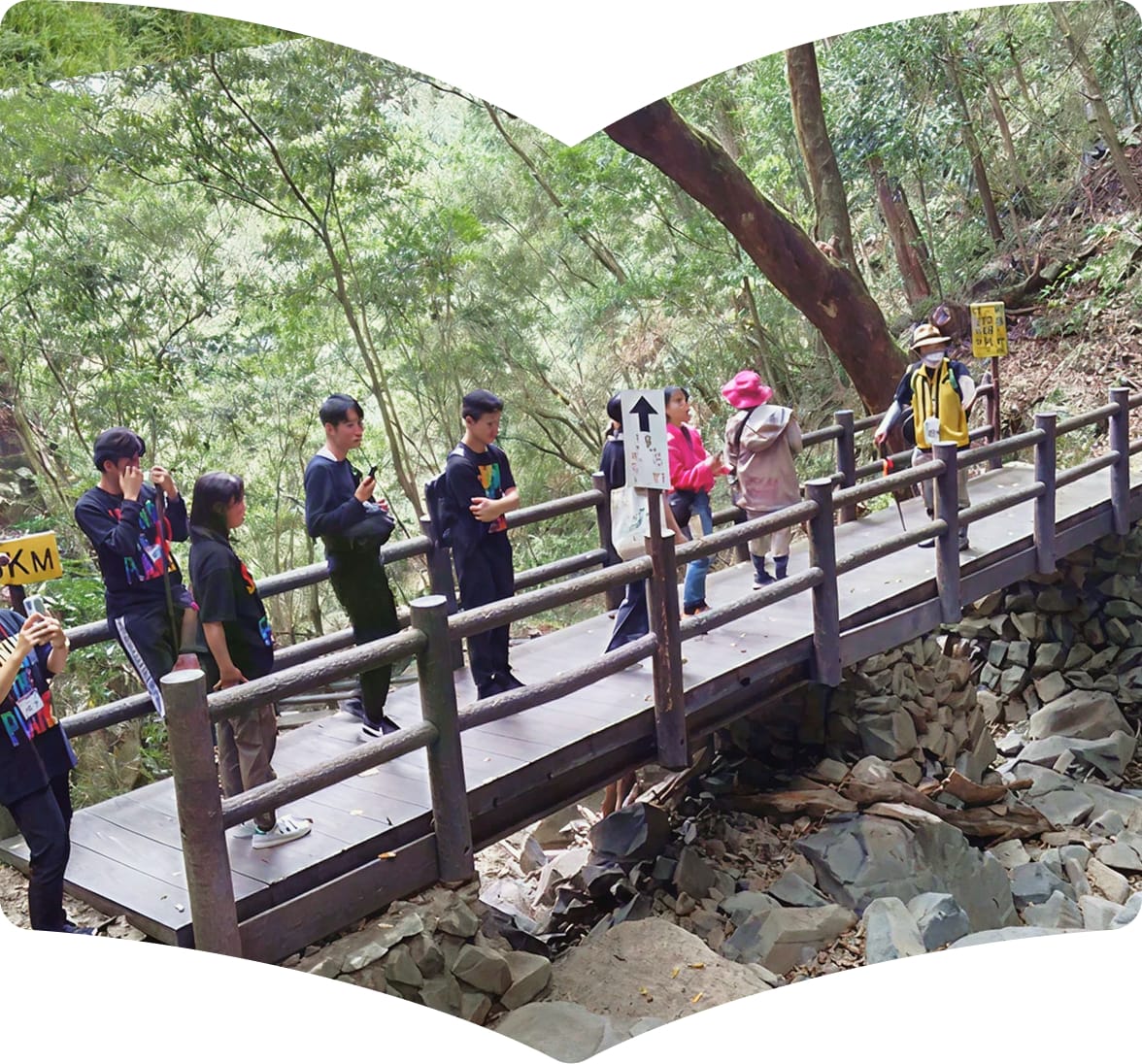
In partnership with universities and other institutions, we conduct joint research on satoyama and implement training programs to cultivate future leaders in the environmental field.
To create a sustainable society, we work on researching and creating Satoyama for local communities in collaboration with six universities.
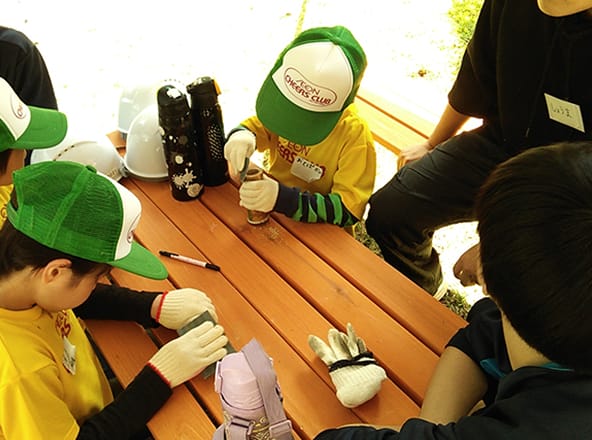
In July 2022, we signed a cooperation agreement with Kyoto University’s Field Science Education and Research Center for the New Satoyama‒Satoumi Co-Creation Project, promoting co-creation through education, research, and collaboration. Under the Connectivity of Hills, Humans and Oceans (CoHHO) framework, we share fieldwork findings and support joint studies, including test site activities, biological surveys, study sessions, and community engagement.
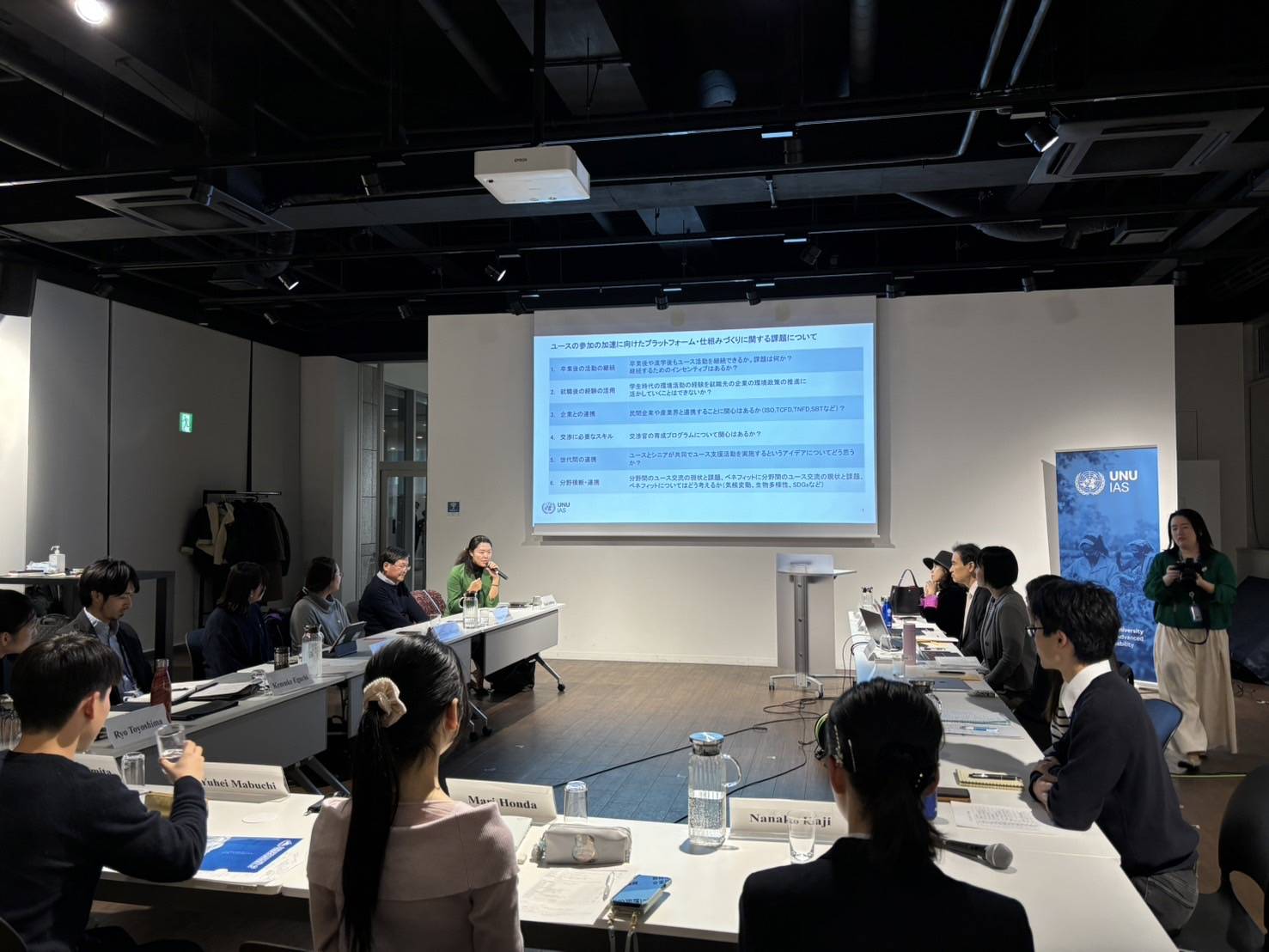
In 2024, we signed a cooperation agreement with the United Nations University Institute for the Advanced Study of Sustainability (UNU-IAS) to achieve global goals like the Kunming-Montreal Biodiversity Framework. By leveraging both of our expertise and networks, we will advance research on domestic and international challenges to develop solutions. In addition, we will propose effective solutions by promoting discussions based on the latest scientific knowledge while also fostering the next generation of global youth leaders.
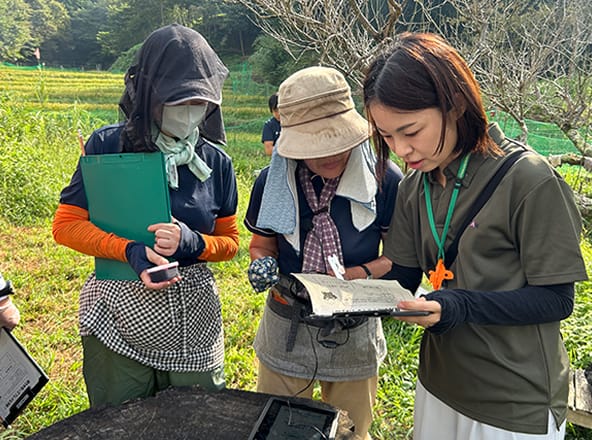
From 2017 to 2021, we collaborated with the University of Tokyo’s Institute for Future Initiatives to host the AEON Future Earth Forum. In March 2022, we co-founded the AEON‒Todai Satoyama Lab to promote a society in harmony with nature and revitalize regional economies. The Lab continues to drive innovation through locally rooted initiatives.
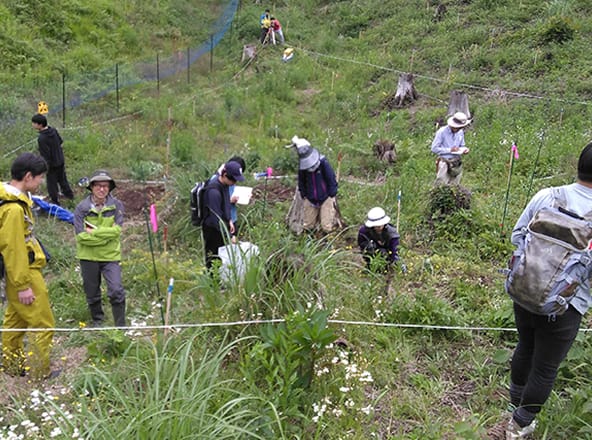
Since 2022, we have been collaborating with Chiba University’s Graduate School of Horticulture to study ecosystem changes at KIMITSU AEON Forest through vegetation surveys, sapling protection, and weed control trials. In 2024, we explored new approaches to enjoying, cultivating, and regenerating satoyamastyle forests.
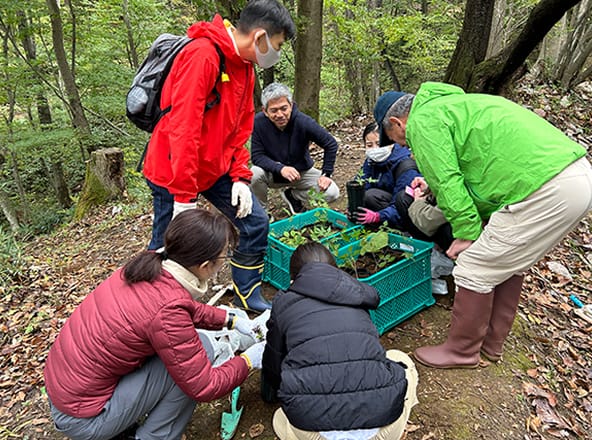
In June 2021, we partnered with Tohoku University’s International Research Institute of Disaster Science (IRIDeS) and AEON MALL Co.,Ltd. to launch the AEON Disaster-Resilient and Environmentally-Friendly City Creation Joint Research Lab. Through this initiative, we conduct joint research and activities focused on disaster preparedness for environmentally friendly cities centered around commercial facilities, and have established regional partnership hubs to foster resilient, safe, and secure communities.
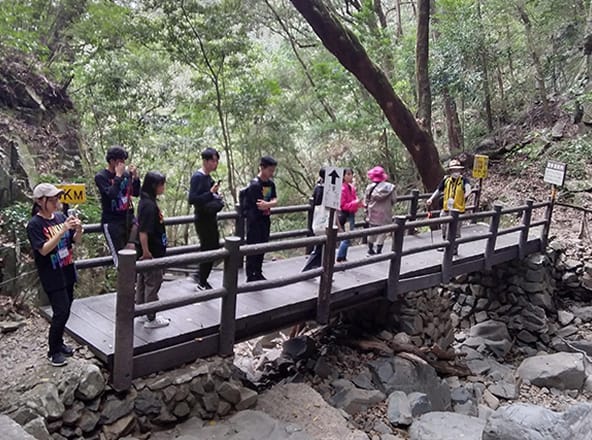
In September 2020, we established the AEON TOWA Research Center in partnership with Waseda University to address pressing environmental challenges. Together, we collaborate on resolving local issues and cultivating global environmental talent, with a focus on satoyama, forest creation, human capacity building, and community development. Since 2022, we have offered endowed courses and conducted research at key satoyama sites to promote sustainable community-building through satoyama-based approaches.
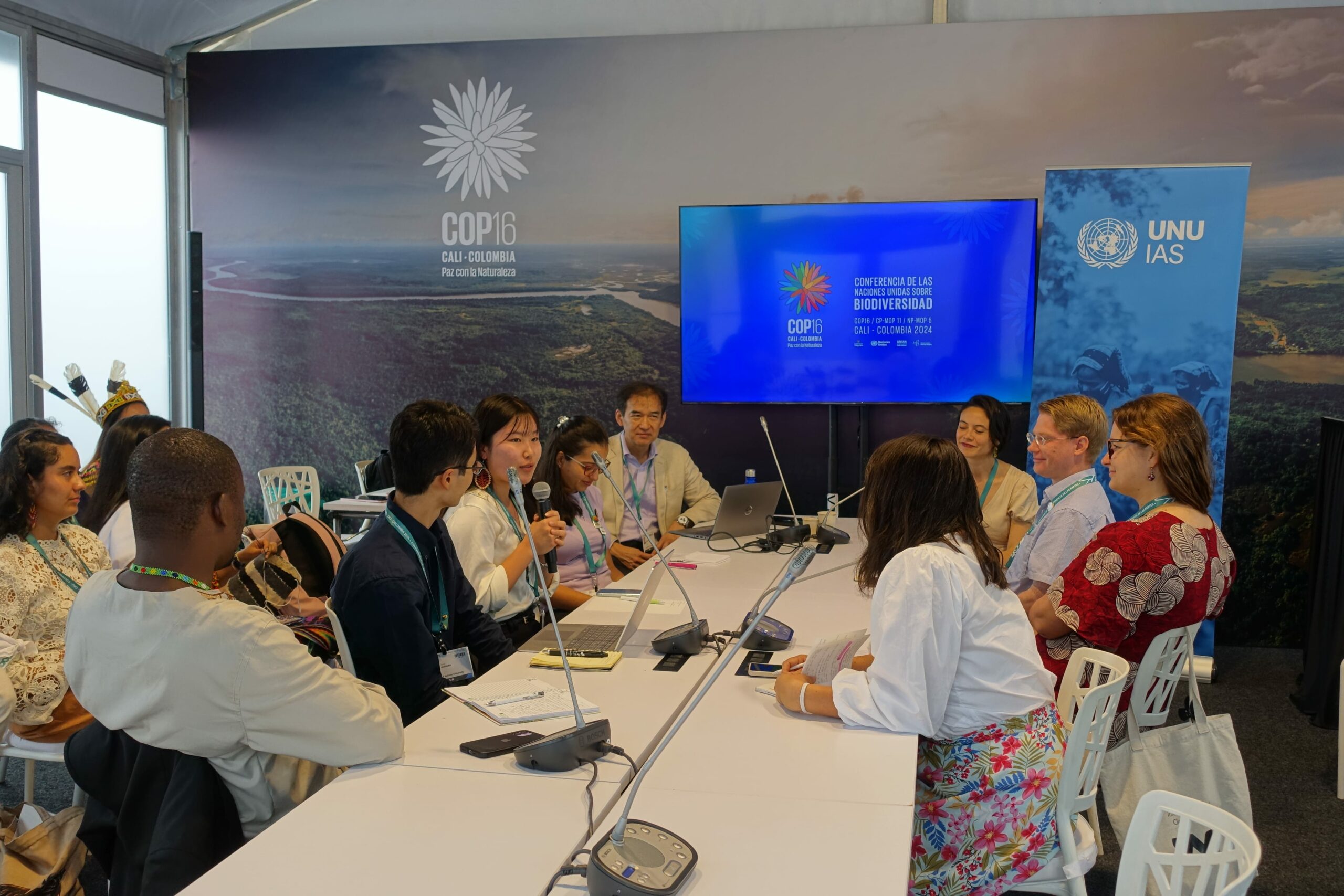
In 2024, we launched the Global Youth MIDORI Platform (GYM) in collaboration with the United Nations University to cultivate globally active environmental leaders dedicated to biodiversity conservation. The first international training brought together 20 students from eight countries, and two of them were selected to attend COP16 in Colombia, where they participated in cross-cultural exchanges and discussions.
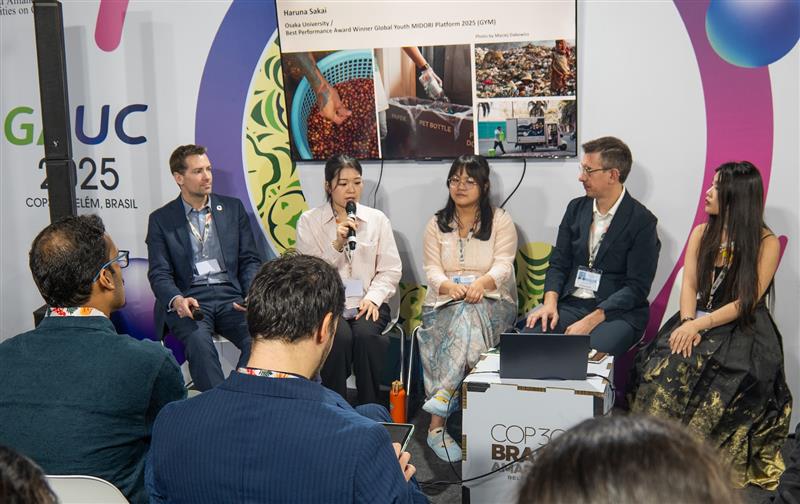
In 2025, for the second edition, the Aeon Environmental Foundation continued its partnership with the United Nations University to offer an even more comprehensive program. We received over 2,000 applications from 27 countries, and 16 participants from eight countries who passed the document screening joined an online international training and speech contest. From this group, two outstanding individuals were selected to attend COP30 in Brazil.
Since 2009, we have donated solar power systems to 56 schools across Japan, Malaysia, Vietnam, China, and Hong Kong to promote awareness and adoption of renewable energy. These systems also serve as educational tools for environmental learning.
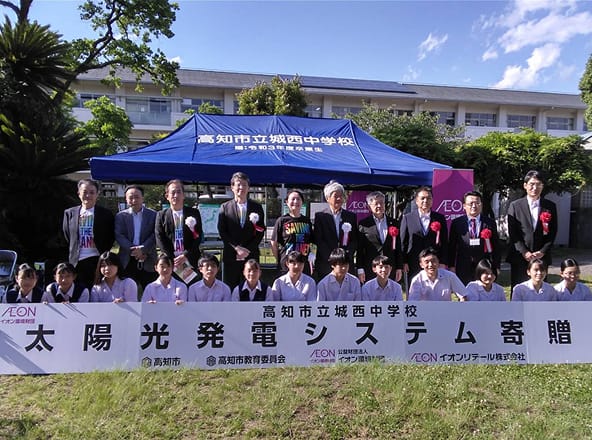
Kochi Municipal Josei Junior High School, Kochi Prefecture, 2022
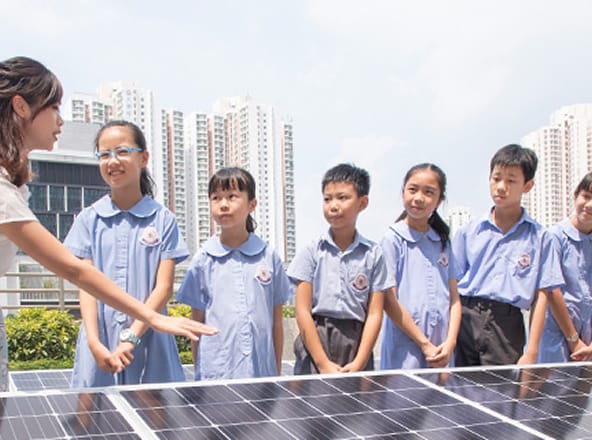
Hong Kong, 2021
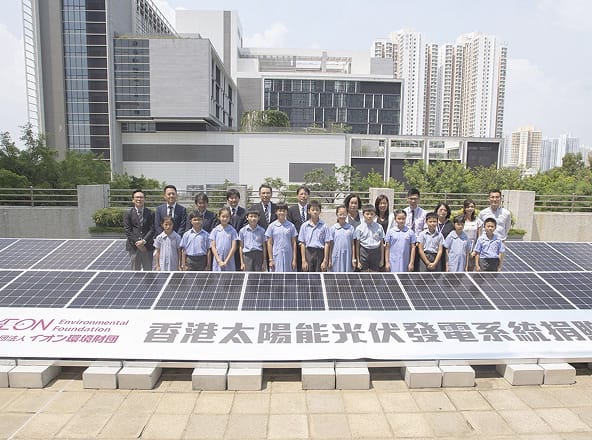
Hong Kong, 2019